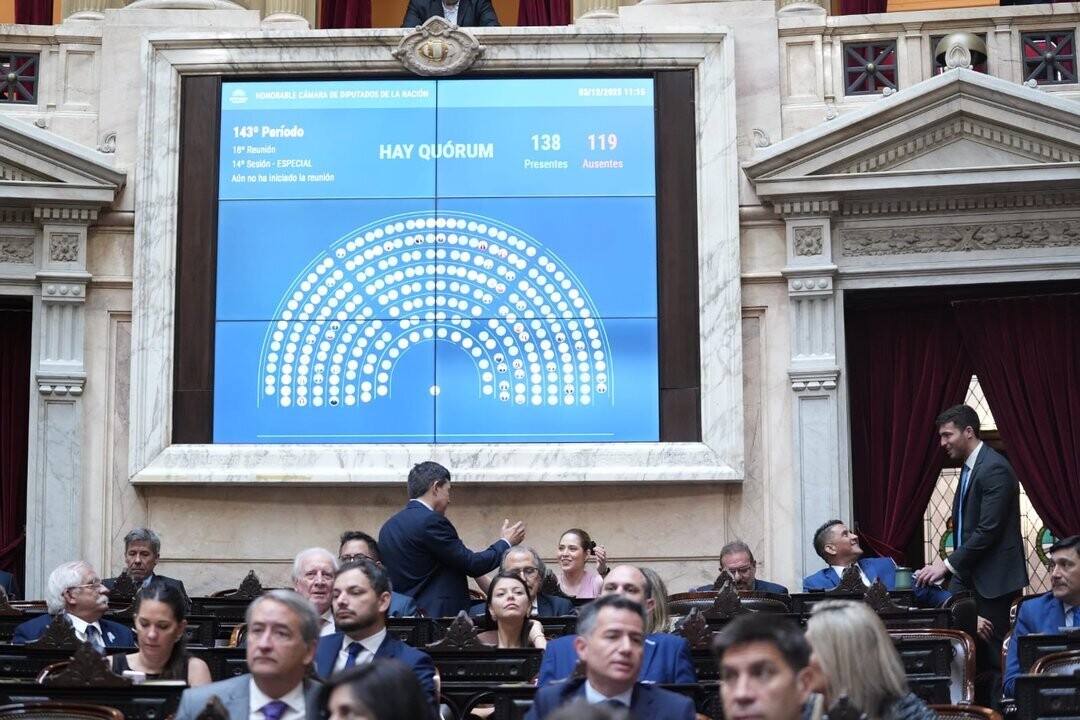
Argentina’s Congress closed a year marked by confrontation and administrative paralysis. With only 11 laws approved during the regular session and two in extraordinary sessions, 2025 was the year with the lowest legislative productivity in the last decade. Polarization was reflected in the lack of cooperation between the opposition and the government.
None of the laws approved during the regular sessions were introduced by the Executive; eight of the 11 were opposition initiatives, while three corresponded to international agreements inherited from the previous administration. The 2026 Budget and the Fiscal Innocence Law, both introduced by the government, were the only approvals in the extraordinary sessions.
President Javier Milei invoked his veto power on seven occasions, but Congress overturned three of those vetoes, ensuring the laws were passed despite the rejection by the Casa Rosada. The opposition used commission summonses, an uncommon technical tool, to force debate and apply pressure on the Executive.
The year-end report also indicates that of the 22 sessions held, half were special, showing the lack of agreement to establish a common parliamentary agenda. This numerically weak scenario remains despite the government's confidence that the new composition of Congress after the October elections will shift the dynamic from defense to attack, allowing the government to regain legislative initiative in 2026.